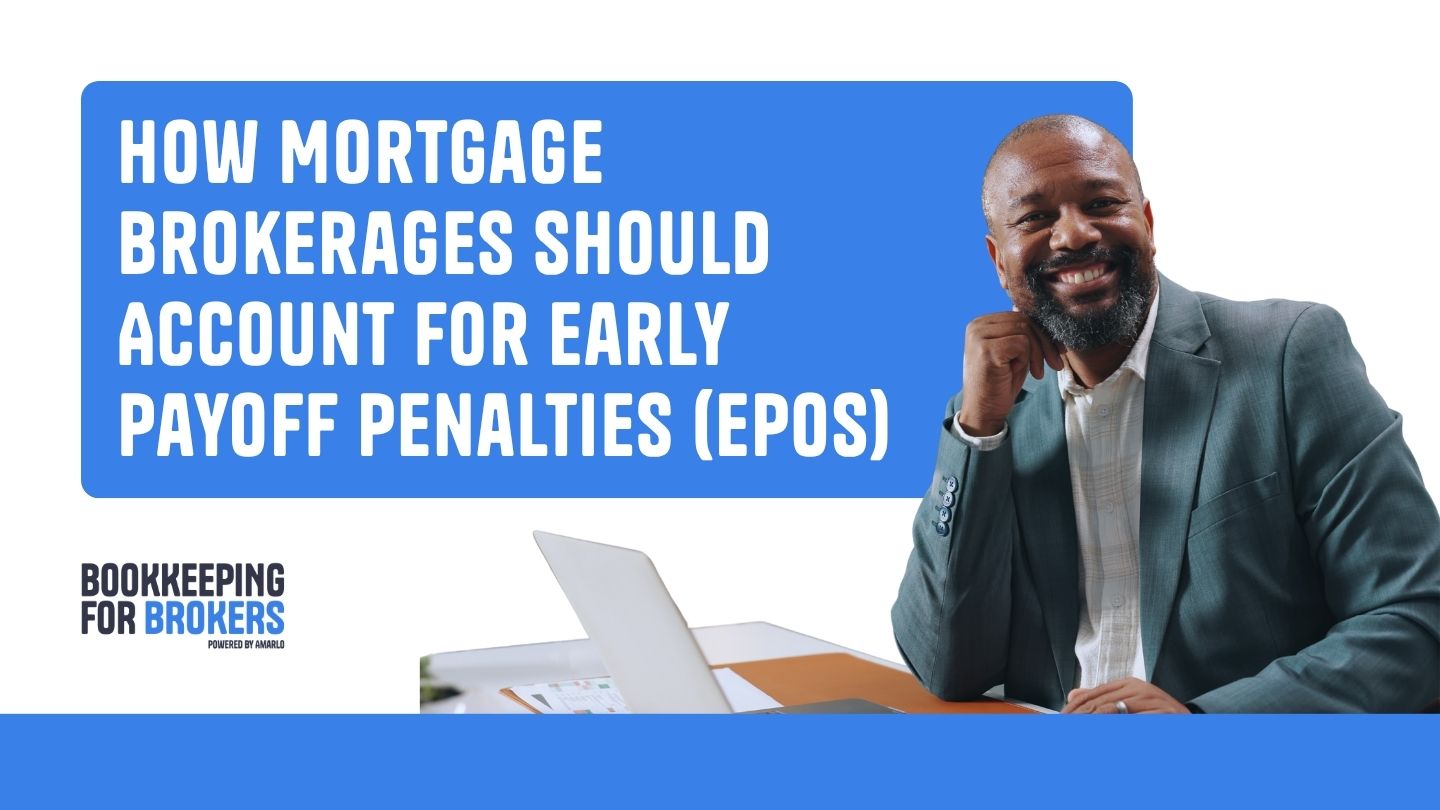
How Mortgage Brokerages Should Account for Early Payoff Penalties (EPOs)

If you run a mortgage brokerage long enough, you eventually experience this situation. A loan funds, the commission is recorded, and the month looks strong. Production is steady, revenue is healthy, and the numbers reflect a good stretch of closings.
Then, a few months later, a lender statement arrives with an adjustment. The borrower paid off the loan earlier than expected, and the lender applies an Early Payoff Penalty (EPO). The commission that was previously paid must now be refunded in part or in full.
Early payoffs are part of the mortgage industry. The challenge is how these penalties appear in the financials. A month that looked profitable suddenly shows a negative adjustment tied to a loan that closed long ago.
EPOs are not an everyday occurrence for most brokerages, but when they do occur, they can create confusing adjustments to financial reports. Once you understand how to track and record EPOs, they become a manageable part of running the business.
What An Early Payoff (EPO) Penalty Actually Is
An EPO occurs when a borrower pays off or refinances a loan shortly after it closes.
Most lenders expect loans to remain active for a certain period of time after funding. This is often called the recapture window and commonly lasts 3 to 6 months, although it can vary by lender.
If a borrower pays off the loan during that window, the lender may require the brokerage to refund part or all of the commission originally paid.
From the brokerage’s perspective, this means revenue that looked fully earned when the loan was funded is later adjusted. The commission was received, but the lender’s agreement allows them to reclaim it if the loan does not stay on the books long enough.
Why EPOs Can Distort Monthly Financial Results
The timing of EPOs is what makes them tricky from a financial reporting perspective.
Imagine a loan funds in January and generates a $5,000 commission. That revenue is recorded in January because the loan closed and the commission was earned.
Then, in April, the borrower refinances, and the lender applies an EPO. The brokerage must return that $5,000.
Now April’s financial report includes a negative adjustment tied to work that happened months earlier.
If EPOs are not tracked clearly, owners may look at that April report and feel like the business suddenly performed worse. When in reality, the penalty relates to a January loan. Over time, a handful of EPOs can make monthly profits appear more volatile than they really are.
Where Early Payoff Penalties Should Appear In Your Books
Mortgage brokerages typically handle EPOs in one of two ways. The goal is simply to make sure the financial statements reflect what actually happened.
Record EPOs as a reduction to commission revenue
One common approach is to record EPOs as a reduction to commission revenue. In this case, the penalty reduces the revenue associated with the loan.
For example, if a loan generated a $5,000 commission but later triggered a $5,000 EPO, the net revenue from that loan becomes zero. This approach keeps revenue aligned with the true economics of the deal.
Record EPOs within Cost of Goods Sold
Another approach is to record EPOs within Cost of Goods Sold. Some brokerages prefer this structure because it keeps gross commission revenue visible, while still capturing the cost of the penalty.
In that model, EPOs sit alongside other loan production costs such as loan officer commissions or processing expenses.
Both approaches can work well. What matters most is that the treatment is consistent and clearly visible in the financial reports.
Why Tracking EPOs By Loan Matters
Many brokerages only notice EPOs when they appear on a lender statement. At that point, the penalty is already applied, and the adjustment simply gets recorded.
A more helpful approach is to track EPO exposure from the moment a loan funds.
A simple tracking structure can include:
- Loan ID
- Fund date
- Lender
- Commission amount
- Recapture window end date
- Whether an EPO occurred
With this information in place, owners gain visibility into how much commission is still inside recapture windows and which loans could potentially trigger a penalty.
Instead of being surprised by EPOs, the business can see where the exposure exists.
How EPO Tracking Helps Owners Make Better Decisions
Once EPOs are tracked consistently, they begin to reveal useful patterns. For example, you may notice that certain lenders experience higher recapture activity. In other cases, a spike in refinance activity may explain why more loans are paying off early.
Tracking also makes it easier to answer operational questions:
Are EPOs affecting certain loan types more than others?
Are they concentrated within a particular funding period?
Is overall exposure increasing as production grows?
These insights are difficult to see when EPOs are simply buried in a general expense account. Clear tracking turns them into useful information instead of frustrating surprises.
A Simple Process For Managing EPOs Each Month
Managing EPOs does not require complicated analysis; it simply requires a consistent monthly process.
During the month-end close, most brokerages benefit from reviewing lender statements for any EPO adjustments and recording them clearly in the accounting system.
At the same time, updating the internal loan tracking sheet with any EPO activity keeps the recapture exposure current.
Finally, reviewing loans that are still inside recapture windows provides a simple view of how much commission is still at risk of adjustment.
Once this structure is in place, the process becomes routine and takes very little time each month.
Build More Financial Clarity Into Your Brokerage
When EPOs are tracked clearly and recorded consistently, the numbers begin to tell a more accurate story. Revenue reflects the true economics of the deals you close, and adjustments tied to older loans become easier to understand.
At Bookkeeping for Brokers, we work with mortgage brokerages to maintain accurate books, track commission activity, and bring clarity to the financial side of the business. With the right structure in place, lender adjustments like EPOs stop feeling unpredictable and become just another manageable part of running a brokerage.
If you would like help improving how your brokerage tracks commissions, lender adjustments, and overall profitability, book consultation with us.
We are happy to talk through how your current system is working and where a few small improvements could make your numbers much easier to understand.
.svg)
time to get help with your bookkeeping?
Our professional bookkeepers ensure your financial records meet all IRS standards, freeing you from administrative work. Delegate your bookkeeping and concentrate on core business growth.
time to get help with your bookkeeping?
Our professional bookkeepers ensure your financial records meet all IRS standards, freeing you from administrative work. Delegate your bookkeeping and concentrate on core business growth.
Related Articles
Insurance Agency 1099 Reporting: How To File For Sub-Agents And Contractors
Insurance agency owners who pay sub-agents or contractors need to file 1099-NEC forms by January 31. This guide walks through the rules, the deadlines, and the bookkeeping setup that keeps your agency out of IRS trouble.